Introduction: The Dawn of a New Gaming Paradigm
Over the past decade, the gaming industry has undergone a seismic shift, driven by technological innovations and changing consumer expectations. Among these developments, blockchain technology has emerged as a disruptive force, enabling new economic models and community-driven ecosystems. Central to this transformation is the rise of play-to-earn (P2E) gaming, a model that aligns player engagement with tangible economic benefits. To understand the intricacies and potential of this emerging sector, it is imperative to examine current platforms and their influence on player dynamics and industry standards.
[ihc-hide-content ihc_mb_type="block" ihc_mb_who="unreg" ihc_mb_template="3" ]The Mechanics of Play-to-Earn Gaming
Play-to-earn games leverage blockchain’s capabilities to create unique, tradeable assets—commonly known as NFTs—that players can earn through gameplay. Unlike traditional video games, where the in-game assets are confined within the developer’s ecosystem, P2E titles offer true digital ownership. These assets can be bought, sold, or traded on decentralised marketplaces, fostering vibrant player-driven economies.
Data from industry reports indicates that the NFT-based gaming sector has experienced exponential growth, with transactions surpassing $5 billion in 2022 alone, according to NonFungible.com. This trend exemplifies how blockchain infuses economic value into digital worlds, aligning player incentives with platform sustainability.
Case Study: Shibu Spinning and Community Engagement
While mainstream titles like Axie Infinity or The Sandbox have garnered attention, niche projects are also shaping the landscape by prioritising community empowerment and innovative gameplay mechanics. An illustrative example is visit site, which exemplifies how targeted, community-centric NFTs can foster dedicated ecosystems.
Developers behind such platforms emphasise transparency, fair economic models, and player ownership. They often incorporate features like decentralized governance, enabling the community to influence platform development and asset utility.
Challenges and Ethical Considerations
Despite promising prospects, the P2E model faces criticism relating to sustainability, speculative behaviour, and socioeconomic impacts. Critics highlight that unregulated markets may foster exploitative schemes akin to pyramid structures, primarily impacting vulnerable populations.
Recent analyses suggest that, while several projects demonstrate real utility and community value, others are speculative ventures with limited lifespan. As the industry matures, regulatory frameworks and ethical standards will be critical in shaping sustainable growth.
“Responsible development, transparency, and community involvement are essential pillars for the future of blockchain gaming.” — Industry Analyst, October 2023
Future Outlook: Bridging Entertainment and Economy
The trajectory of P2E gaming indicates a convergence of entertainment, financial literacy, and digital sovereignty. Innovations such as cross-platform interoperability, decentralised finance integrations, and augmented reality experiences are poised to elevate user engagement and economic viability.
The sector’s growth is corroborated by increasing institutional interest, with venture capital investments surpassing $2 billion in 2023, reflecting confidence from traditional finance sectors about blockchain’s transformative potential.
Conclusion: Strategic Imperatives for Industry Stakeholders
As blockchain technology matures, industry stakeholders—from game developers to regulators—must prioritise ethical frameworks, technological robustness, and genuine community engagement. Platforms like visit site exemplify a model where innovation aligns with responsible practices, fostering trust and sustainability in this nascent yet rapidly evolving domain.
Investing in quality infrastructure, transparent governance, and user education will be key to unlocking the full potential of play-to-earn ecosystems and ensuring they serve both players and the industry at large.
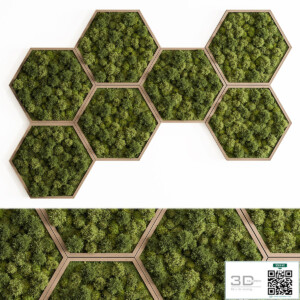
- 3dsmax
- Modern
- Low poly.
- More materials you can find in the Material Editor.
- (Note for beginners: If you need color variations or material variations, please do not import the model in the Slate Material Editor. use Compact Material Editor)
- – Source: Collect
- – Download more 3d models free download here
3ds Max Models on 3dmili.com: A High-Quality Resource for 3D Designers
3dmili.com is one of the leading online platforms providing high-quality 3D models for 3ds Max software. Here, users can find thousands of diverse models ranging from interior, exterior, architectural, decorative items, electronics, to specialized collections for living rooms, bedrooms, kitchens, offices, or coffee shops. Each model is meticulously designed, highly detailed, accurately scaled, easy to edit, and fully compatible with popular versions of 3ds Max.
A standout feature of 3dmili.com is its support for V-Ray and Corona Renderer materials, enhancing render quality with realistic and vivid results. This allows designers, architects, and 3D artists to save time on modeling while improving the final product’s quality. The library is continuously updated with the latest design trends, covering a variety of styles from classical and modern to minimalistic.
<-----------ads----------------->-----------ads----------------->