Introduction: The Rise of Accessible, Realistic Rocket Simulations
Over the past decade, the gaming industry has seen a significant shift towards immersive yet accessible experiences. Particularly in the domain of physics-based simulations, the advent of browser-based platforms has democratized access to complex, realistic environments. Unlike traditional downloads or console purchases, these online platforms enable instant engagement, fostering educational interest and recreational curiosity alike. A key development in this space is the emergence of realistic rocket simulation games that can be played directly through web browsers—serving as both learning tools and entertainment mediums.
[ihc-hide-content ihc_mb_type="block" ihc_mb_who="unreg" ihc_mb_template="3" ]The Significance of Authenticity in Rocket Simulations
Authentic rocket physics is critical not only for enthusiasts and students but also for professionals in aerospace engineering. Accurate simulation relies on detailed modeling of orbital mechanics, propulsion dynamics, and environmental factors such as gravity and air resistance. Industry data indicates that over 70% of educational institutions integrating physics simulations report increased student engagement and understanding, particularly when simulators provide real-time feedback and detailed scientific modeling (Source: EdTech Research, 2022).
In this context, web-based platforms must meet high standards to gain credibility. They need to balance computational simplicity for browser rendering with the fidelity of physical modeling—a challenge that modern web technologies and cloud computing are increasingly overcoming.
The Evolution of Browser-Based Rocket Simulations
| Period | Development Focus | Impact |
|---|---|---|
| Early 2010s | Basic 2D physics engines | Limited interactivity, niche interest |
| Mid 2010s to 2020 | WebGL and HTML5 integration | Enhanced realism, cross-platform accessibility |
| 2020 onward | Advanced physics modeling, cloud computation | Near-professional quality simulators accessible through browsers |
Case Study: The Industry-Leading Role of Interactive Educational Platforms
Modern educational tools blend gamification with rigorous physics modeling to inspire future engineers and space enthusiasts. Platforms such as Rocket Simulator Online exemplify this trend, offering users the chance to experiment with rocket design, launch physics, and orbital trajectories within a web browser environment. The integration of realistic physics engines like Ammo.js, coupled with intuitive UI, enables a seamless experience that’s both educational and engaging.
An exemplary feature on this front is start playing Rocketsim Game online. It serves as a case in point for how online simulation platforms can heighten public interest in aerospace sciences and serve as supplementary tools for formal education.
Future Directions: Merging Realism with Accessibility
Looking ahead, the trajectory of browser-based rocket simulations points toward even greater realism—incorporating satellite tracking, multi-stage rockets, and real-time data integration. Additionally, advancements in browser technologies like WebGPU may soon allow for high-fidelity 3D physics without sacrificing performance or accessibility.
Simultaneously, the integration of machine learning algorithms could personalize educational pathways, provide adaptive feedback, and simulate complex mission scenarios. This synergy aims to democratize space science, making it accessible not just for students and hobbyists but also for professionals seeking rapid prototyping environments.
Conclusion: The Role of Credible Online Platforms in STEM Engagement
In an era where digital literacy and STEM education are paramount, credible web-based simulation platforms have the potential to reshape how we approach learning about space, physics, and engineering. By offering authentic, user-friendly experiences such as those found at start playing Rocketsim Game online, we open pathways for a broader audience to explore the complexities of rocket science without geographical or financial barriers.
This convergence of technology, education, and entertainment underscores the importance of quality in digital simulations—where credibility drives engagement, and engagement fosters the next generation of aerospace innovators.
References
- EdTech Research, 2022. “Physics Simulations in Education.”
- NASA, 2023. “The Future of Space Education.”
- Industry Reports: Web-Based Gaming and Simulation Technologies, 2021.
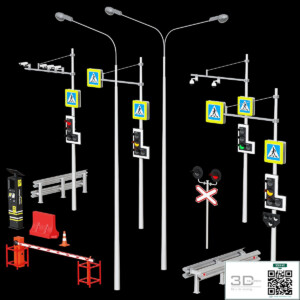
- 3dsmax
- Modern
- Low poly.
- More materials you can find in the Material Editor.
- (Note for beginners: If you need color variations or material variations, please do not import the model in the Slate Material Editor. use Compact Material Editor)
- – Source: Collect
- – Download more 3d models free download here
3ds Max Models on 3dmili.com: A High-Quality Resource for 3D Designers
3dmili.com is one of the leading online platforms providing high-quality 3D models for 3ds Max software. Here, users can find thousands of diverse models ranging from interior, exterior, architectural, decorative items, electronics, to specialized collections for living rooms, bedrooms, kitchens, offices, or coffee shops. Each model is meticulously designed, highly detailed, accurately scaled, easy to edit, and fully compatible with popular versions of 3ds Max.
A standout feature of 3dmili.com is its support for V-Ray and Corona Renderer materials, enhancing render quality with realistic and vivid results. This allows designers, architects, and 3D artists to save time on modeling while improving the final product’s quality. The library is continuously updated with the latest design trends, covering a variety of styles from classical and modern to minimalistic.
<---------------> ads