In an era where data security is paramount, practitioners and theorists alike are increasingly turning towards unconventional sources of inspiration—ranging from nature to ancient mysticism. While contemporary cryptography often relies on complex algorithms and computational power, some visionary thinkers are exploring the archaeo-mystical symbols and esoteric knowledge as foundational elements to safeguard digital assets. This convergence of ancient symbolism and advanced cybersecurity raises compelling questions about the role of historical knowledge in shaping the future of data protection.
[ihc-hide-content ihc_mb_type="block" ihc_mb_who="unreg" ihc_mb_template="3" ]The Origins and Significance of Mystical Symbols in Ancient Civilizations
Ancient civilizations across the globe—Egyptians, Babylonians, Mayans—employed symbols and rituals believed to harness cosmic energies or divine forces. These symbols, often inscribed on artifacts, amulets, or inscriptions, served as custodians of spiritual power or protection. For example, the Egyptian hieroglyphs embody complex layers of meaning, acting as both language and talismanic symbols designed to invoke divine favor or ward off malevolent forces.
Modern scholars recognize that these symbols functioned as early forms of “information encoding”—a primitive yet effective means of transmitting secret knowledge, religious doctrines, or cultural identity. Their visual complexity and contextual significance made them difficult for outsiders to decipher, thus serving as an ancient form of data privacy.
From Sacred Symbols to Security Protocols: A Theoretical Bridge
Today, with the advent of digital encryption, scholars and cryptographers are revisiting these ancient symbols not merely for their aesthetic value, but for their potential utility in cryptographic systems. The idea hinges on the fact that many mystical symbols contain layered meanings, complex patterns, and cryptic structures analogous to modern cipher keys.
For instance, some researchers explore the possibility of developing cryptographic keys inspired by symbolic structures such as the Eye of Horus or the Seals of Solomon. These symbols, imbued with cultural and spiritual significance, could serve as frameworks for generating complex, human-readable keys, or even as the basis for steganographic techniques—embedding information within symbolic images hidden within digital media.
Case Study: The Eye of Horus and Modern Cybersecurity
The Eye of Horus is an ancient Egyptian symbol associated with protection, royal power, and good health. Its geometric form, composed of a series of symbols representing different fractions, demonstrates a primitive form of data encoding that has fascinated cryptographers and historians alike.
Recent explorations suggest that the symbolic structure embodied by the Eye of Horus can inspire algorithms that use geometric complexity for cryptographic keys, resulting in systems that are both resilient and deeply rooted in historical motifs. This fusion of the mystical and the mathematical could potentially lead to more intuitive key generation processes, tapping into the symbolic language of antiquity for modern security implementations.
The Industry Insights and Future Directions
Leading cybersecurity companies and research institutions are now examining hybrid models that integrate esoteric symbolism into encryption standards. These models emphasize:
- Enhanced entropy: Utilizing symbolic complexity to improve key randomness.
- Steganographic applications: Embedding data within mystical symbols for covert communication.
- Cultural resonance: Building mnemonic devices for security protocols grounded in historical art.
Such innovations are still in preliminary stages, but the potential for reinvigorating cryptography with culturally rich, historically significant symbols offers a unique avenue for future research. Moreover, it reinforces the principle that security mechanisms need not be solely mechanical but can be augmented by human cultural intelligence and symbolism.
Conclusion: Embracing a Hybrid Future of Security & Mysticism
The exploration of ancient symbols like the Eye of Horus exemplifies how forgotten knowledge can provide innovative paradigms for contemporary technological challenges. As we navigate increasingly complex digital landscapes, looking back to the symbolic systems of our ancestors might unlock new, resilient forms of security—capacitated by cultural symbolism, geometric intricacy, and secret knowledge.
To delve deeper into this fascinating intersection of history and cybersecurity, you can find inspiring examples and detailed explorations by hier klicken. As the boundaries of technology expand, so does our appreciation for the wisdom embedded in ancient symbols—reminding us that sometimes, the key to the future lies hidden in the symbols of the past.
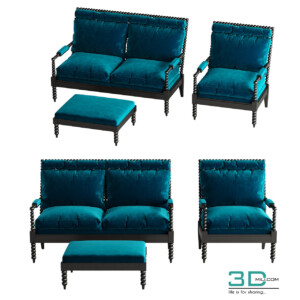
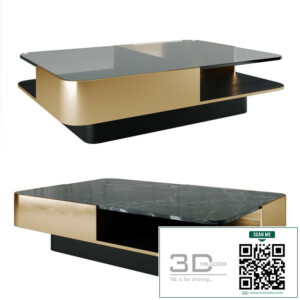
[/ihc-hide-content]- 3dsmax
- Modern
- Low poly.
- More materials you can find in the Material Editor.
- (Note for beginners: If you need color variations or material variations, please do not import the model in the Slate Material Editor. use Compact Material Editor)
- – Source: Collect
- – Download more 3d models free download here
3ds Max Models on 3dmili.com: A High-Quality Resource for 3D Designers
3dmili.com is one of the leading online platforms providing high-quality 3D models for 3ds Max software. Here, users can find thousands of diverse models ranging from interior, exterior, architectural, decorative items, electronics, to specialized collections for living rooms, bedrooms, kitchens, offices, or coffee shops. Each model is meticulously designed, highly detailed, accurately scaled, easy to edit, and fully compatible with popular versions of 3ds Max.
A standout feature of 3dmili.com is its support for V-Ray and Corona Renderer materials, enhancing render quality with realistic and vivid results. This allows designers, architects, and 3D artists to save time on modeling while improving the final product’s quality. The library is continuously updated with the latest design trends, covering a variety of styles from classical and modern to minimalistic.
<-----------ads----------------->