Over the past decade, digital card games have transcended their traditional physical origins to become a dominant force within both casual and competitive gaming landscapes. From *collectible card games* (CCGs) like Magic: The Gathering to free-to-play digital variants such as Hearthstone and Legends of Runeterra, the industry has witnessed a remarkable evolution driven by technological innovation, shifting player preferences, and the emergence of new gameplay mechanics.
[ihc-hide-content ihc_mb_type="block" ihc_mb_who="unreg" ihc_mb_template="3" ]Historical Context and Industry Growth
The inception of digital card games traces back to the early 2000s, with pioneering titles like Yu-Gi-Oh! Online and initial adaptations of traditional physical games. However, it wasn’t until smartphones and improved internet infrastructure that these games experienced exponential growth. According to Newzoo’s 2023 report, the global digital collectible card game revenue surpassed $1.2 billion, reflecting a compound annual growth rate (CAGR) of approximately 15% since 2018.
Key industry players have contributed to this expansion, innovating on core mechanics and integrating social and eSports elements. The convergence of live streaming platforms and online tournaments has further propelled the visibility and legitimacy of digital card gaming as a serious competitive discipline.
Mechanics and Player Engagement: A Deep Dive
Modern digital card games have evolved into more than just TCG adaptations; they now incorporate complex strategy layers, dynamic gameplay, and engaging lore. For example, games like Legends of Runeterra emphasize player decision-making with innovative mechanics like *regions* and *mana* management, fostering deeper engagement compared to traditional card games.
| Title | Platform | Unique Feature | Global Players (Millions) |
|---|---|---|---|
| Hearthstone | PC, Mobile | Minion Summoning & Classic Warcraft Lore | 20 |
| Legends of Runeterra | PC, Mobile | Region-based Mechanics & Free-to-Play Model | 8 |
| Magic: The Gathering Arena | PC, Mobile | Adapts Classic CCG with Modern Digital Mechanics | 12 |
Emergence of New Markets and Cultural Significance
This growth is not merely transactional; it has catalyzed a cultural shift. Digital card games have become a social hub for players worldwide, with tournament scenes rivaling traditional sports in viewership and sponsorship. The success of eSports titles has driven the development of professional circuits, further legitimizing digital card competitive gameplay.
“Digital card games exemplify the convergence of tradition and innovation, redefining how players interact with strategy, lore, and community in the digital age.” — Industry analyst Jane Smith
The Future: Innovation and Ethical Design
As technology advances, so too does the potential for innovation in game design. Concepts such as augmented reality (AR) integration, cross-platform play, and AI-driven opponent customization are on the horizon. However, alongside these technological strides, industry leaders recognize the importance of ethical design—particularly in addressing concerns over in-game monetization strategies that resemble gambling mechanics.
Understanding these trends is crucial for both developers and consumers. For instance, new games are increasingly transparent about loot box probabilities and actively promote healthy gaming habits, as highlighted in recent industry best practices.
Case Study: Analysing a Newcomer—Le Santa game review
Among emerging titles capturing attention is Le Santa, which demonstrates unique mechanics and cultural motifs. The detailed review available at Le Santa game review offers critical insights into its gameplay innovation, thematic depth, and market positioning.
This review exemplifies how outsider perspectives can shed light on the nuanced aspects of new digital card games—helping players and industry insiders alike understand the qualitative implications of game design choices and cultural relevance.
Conclusion: Navigating the Digital Card Game Renaissance
As the landscape continues to shift, the core drivers remain innovation, community, and strategic depth. Industry experts anticipate that the fusion of emerging technologies and ethical considerations will shape a sustainable future for digital card games. The ongoing dialogue between developers, players, and critics—as exemplified by detailed reviews like those found at Le Santa game review—is vital for fostering a vibrant, responsible gaming ecosystem.
In understanding these dynamics, stakeholders can better appreciate the cultural significance and technical sophistication that digital card games now embody—a true renaissance rooted in tradition but propelled by relentless innovation.
[/ihc-hide-content]- 3dsmax
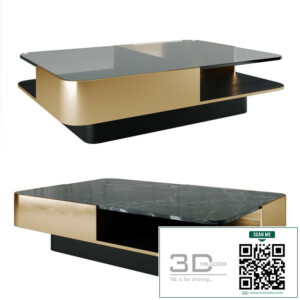
- Modern
- Low poly.
- More materials you can find in the Material Editor.
- (Note for beginners: If you need color variations or material variations, please do not import the model in the Slate Material Editor. use Compact Material Editor)
- – Source: Collect
- – Download more 3d models free download here
3ds Max Models on 3dmili.com: A High-Quality Resource for 3D Designers
3dmili.com is one of the leading online platforms providing high-quality 3D models for 3ds Max software. Here, users can find thousands of diverse models ranging from interior, exterior, architectural, decorative items, electronics, to specialized collections for living rooms, bedrooms, kitchens, offices, or coffee shops. Each model is meticulously designed, highly detailed, accurately scaled, easy to edit, and fully compatible with popular versions of 3ds Max.
A standout feature of 3dmili.com is its support for V-Ray and Corona Renderer materials, enhancing render quality with realistic and vivid results. This allows designers, architects, and 3D artists to save time on modeling while improving the final product’s quality. The library is continuously updated with the latest design trends, covering a variety of styles from classical and modern to minimalistic.
<-----------ads----------------->